
Search All Items
- Filters:
- Language
- English 7210
- Spanish 43
- ENGLISH 3
- English 2
- census_013 1
- contra_costa_schedule_1_volume_1 1
- Type
- Image 3888
- Still Image 2860
- Text 445
- Text 54
- Textual 2
- Image of the California Census from the records of the office of the California Secretary of State 1
Search Results 1451 to 1460 of 7358
-
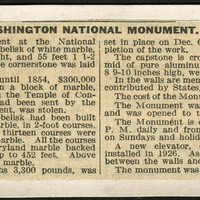
This undated clipping from an unidentified newspaper provides a detailed description of the Washington Monument.
Date: Undated
-
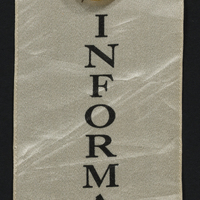
In the years following the passage of the 1911 state suffrage amendment, supporters continued to advocate for the federal enfranchisement of women across the country. Suffragists created and distributed ephemera to publicize their cause and gain support for the movement, including literature, pennants, posters, shopping bags, playing cards, postcards, and pin-back buttons, such as this ribbon with a “Votes for Women” pin from 1912.
Date: 1912?
-
Correspondence from Lucile Kennedy to Elizabeth B. MacLatchie regarding
Date: February 16, 1945
-
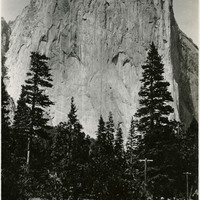
Caption: "El Capitan," c. 1917. El Capitan is a vertical granite rock formation in Yosemite Valley. It's sheer cliff face, rising almost 3,000 feet above the Valley, is a favorite rock climbing location.
Date: 1917
-
Caption: "Ponciana [sic] and Whitehall Hotels. Ponciana {sic] is the Largest Frame Bldg. Hotel in the World. Palm Beach, Florida. July 8, 1934." Both the Royal Poinciana Hotel (center) and the Whitehall Hotel (far right) can be seen in this photograph, taken from across Lake Worth. The Royal Poinciana, built by Henry Flagler as a resort retreat for wealthy guests, opened in 1894. Renovations eventually enlarged the hotel to a length of 1,800 feet, with over three miles of corridors and hallways, and rooms for over 1,000 guests. At one point, it was reputed to be the largest wood structure in the world. Attendance declined in the 1920s, however, as tourists were attracted to more modern facilities. Damage by a hurricane and the Great Depression combined to close the hotel in 1934. The building was razed a year later. The Whitehall Hotel started its existence as a mansion, also built by Flagler, as a present for his wife. After Flagler's death in 1913, the home was sold to a group of investors who erected an eleven-story tower and converted the entire complex to use as a resort hotel. In 1959, the Henry Morrison Flagler Museum purchased the building. It now serves as a museum.
Date: 7/8/1934