
Search All Items
- Filters:
- Language
- English 6020
- Spanish 194
- ENGLISH 2
- English 1
- census_013 1
- Type
- Image 3854
- Still Image 1909
- Text 426
- Text 22
- Textual 2
Search Results 1721 to 1730 of 6281
-
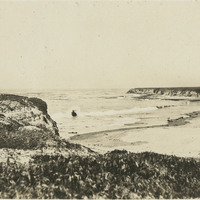
No Caption: shows a beachhead at San Francisco, c. 1918.
Date: 1918
-
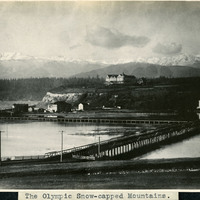
Caption: "The Olympic Snow-capped Mountains.," c. 1908-1912. View of a coastal inlet or tideland with raised roads, a large building (probably a resort hotel) in the middle distance, and the white-capped Olympic Mountains in the far distance.
Date: 1908
-
Caption: "Camp Life -- Chino Calif." William and Grace McCarthy laughing as they remove their shoes in preparation for getting into a bed situated under a tree in a yard or garden.
Date: 1915
-
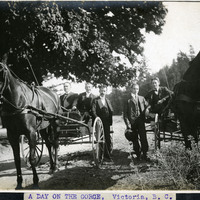
Caption: "A DAY ON THE GORGE, Victoria, B. C.," c. 1906. William McCarthy (center, with moustache) posing with four unidentified men and two horse-and-buggies. The Gorge is a narrow tidal inlet in Victoria running from Selkirk Trestle to the Craigflower Bridge. The inlet became a popular recreation destination for the area's residents as Victoria grew.
Date: 1906
-
Correspondence from Azile H. Aaron to Martha A. Chickering regarding various funding sources for public assistance and eligibility requirements
Date: November 27, 1942
-
St. Hubert Extra Stock, Carte Blanche California Wine Growers Union, St. Hubert Congnad
Date: 1890
-
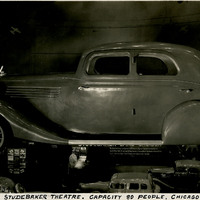
Caption: "Sept. 20, 1934, The Big Studebaker Theatre. Capacity 80 People. Chicago Fair." This giant replica of a 1934 Studebaker Land Cruiser at the Century of Progress Exposition, made of plaster over a wood frame, sat above a small theater capable of sitting eighty people. The Exposition, a world fair attended by thirty-nine million people, celebrated Chicago's one-hundred year anniversary of incorporation. Originally planned to only run from May to November in 1933, it was such a success that its organizers decided to keep it running for a second season from May through October the following year. The central theme of the Exposition was technological innovation, with a motto of "Science Finds, Industry Applies, Man Conforms."
Date: 9/20/1934