
Search All Items
- Filters:
- Language
- English 4964
- Spanish 26
- ENGLISH 2
- English 1
- census_013 1
- contra_costa_schedule_1_volume_1 1
- Type
- Image 3609
- Still Image 940
- Text 415
- Text 22
- Textual 2
- Image of the California Census from the records of the office of the California Secretary of State 1
Search Results 1771 to 1780 of 5047
-
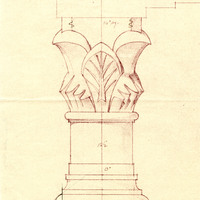
Caption: "Col - Cap & Base - Fresno State College." Detail drawing of column, Student Activities Building. Design and drawing by Alfred Eichler. Project for Department of Education.
Date: 1940
-
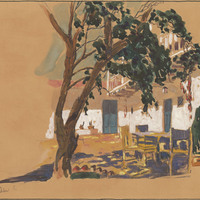
Drawing of Study Court, Mesa Campus, Santa Barbara State College. Design and drawing by Alfred Eichler. Not built. Project for Department of Education.
Date: 1932
-
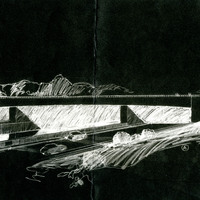
Caption: "Arroyo Seco Parkway, Hough Street Bridge. VII - LA - 205 - So. Pasa." Overpass study by Alfred Eichler. Negative. Project for Department of Public Works - Highways - Bridge Department.
Date: undated
-
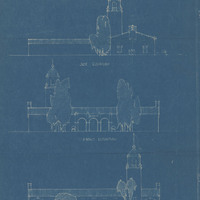
Design and drawing of California State Building for Nevada Highways Exposition in Reno, Nevada, by Alfred Eichler, c. 1926; from packet of designs and plans by Eichler for the Transcontinental Highways Exposition of 1927. Built. Initial appropriation of $100,000 was reduced to $50,000, so only one half of the plan was built. The tower was eliminated.
Date: 1921
-
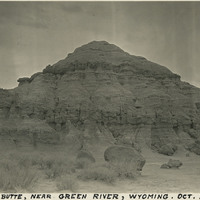
Caption: "Church Butte [sic], near Green River, Wyoming. Oct. 2, 1934." The Church Buttes in Wyoming consist of sandstone eroded by wind and weather into a butte approximately 1,000 feet in diameter and rising up to 100 feet above the surrounding valley floor. Located along the Overland Route used by emigrants to the West Coast, the formation gained additional notoriety for being a camp site for Brigham Young and the first Mormon party to head west, as well as a relay site for the Pony Express.
Date: 10/2/1934
-
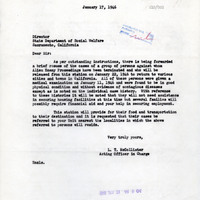
Correspondence from L. T. McCollister to Director of State Department of Social Welfare regarding individuals released from incarceration camps
Date: January 17, 1946
-
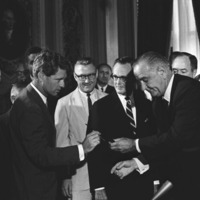
This item has no description.
Date: 1965
-
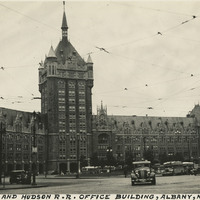
Caption: "Delaware and Hudson R.R. Office Building, Albany, N.Y., Sept. 7, 1934." View of the enormous Gothic building constructed by and for the Delaware and Hudson Railroad Company between 1914-1918. It also housed the offices of the Albany Evening Journal. A small city park sits in front of the building's central tower, surrounded on all sides by a looped street originally intended for trolley cars. The building was gradually abandoned by the businesses within, until purchased in 1973 by the State University of New York (SUNY). SUNY renovated the building for use as its administrative offices, a purpose which it still serves today.
Date: 9/7/1934
-
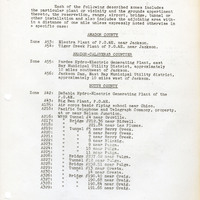
List of key locations in each prohibited zone by county
Date: April 6, 1942
-
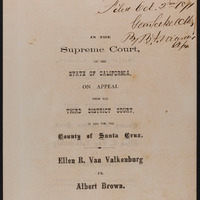
A Brief of Respondent is filed in the appellate court by the party who won in the previous trial and defends the lower court’s original decision. Ellen Van Valkenburg began an important legal battle for women’s enfranchisement in California on July 21, 1871, when she requested that Santa Cruz County Clerk Albert Brown enter her name in the Great Register of voters. After Brown (a willing accomplice in helping her bring the case to court) refused to register her, Van Valkenburg and her lawyer, Santa Cruz Judge Albert Hagan, began legal proceedings by requesting a writ of mandamus, a judicial remedy used to compel agencies to perform ministerial acts, such as registering voters. Van Valkenburg and Hagan argued her case by citing the 14th Amendment of the U.S. Constitution. The new amendment, ratified 3 years earlier in 1868, defined all persons born or naturalized in the U.S. as citizens protected by civil rights. Van Valkenburg and Hagan asserted that American women were considered citizens under this amendment, and that citizenship automatically granted absolute rights, including the right to vote. The case first went to California’s Third District Court. Many of America’s most prominent suffragists, including Elizabeth Cady Stanton and Susan B. Anthony, were with Van Valkenburg in Santa Cruz when the lower court ruled against her on August 16, 1871. Van Valkenburg and Hagan swiftly appealed this decision through the Supreme Court of California. In the end, the Supreme Court of California upheld the lower court’s verdict under the reasoning that as a white American woman, Van Valkenburg already had citizenship and civil rights prior to the passage of the 14th amendment, and that the 14th amendment did not provide her with any additional political rights, such as the right to vote. While Van Valkenburg lost her case, and subsequent lawsuits failed to secure women's suffrage nationwide, the case stands as a critical early example of legal advocacy for women's political rights in California.
Date: October 2, 1871