
Search All Items
- Filters:
- Language
- English 5310
- Spanish 43
- ENGLISH 2
- English 1
- census_013 1
- Type
- Image 3851
- Still Image 1032
- Text 431
- Text 22
- Textual 13
- Artifact/Ephemera 1
- Photographic--Print 1
Search Results 1871 to 1880 of 5420
-
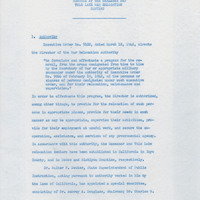
Memorandum regarding planning for the education of incarcerated students
Date: Undated
-
Caption: "Vancouver Hotel, Vancouver, B.C.," c. 1908-1912. View of the Hotel Vancouver, designed by architect T.C. Sorly for the Canadian Pacific Railway (CPR). This photograph shows the first building on the site, which opened in 1888. By 1916, the area had grown so much that the CPR razed this building and constructed a new, larger, more modern facility.
Date: 1908
-
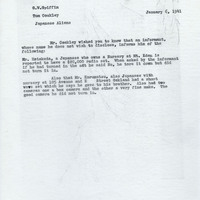
Memorandum from Tom Coakley to G. W. Griffin regarding radios owned by Japanese; While document is dated January 6, 1941, content and placement within the files suggests that date was actually January 6, 1942
Date: January 6, 1941
-
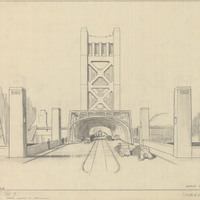
Caption: "Design No. 7." Pencil drawing of Tower Bridge concrete towers by Alfred Eichler. Note on drawing: "Tower subject to modification." Project for Department of Public Works - Highways - Bridge Department.
Date: 1934
-
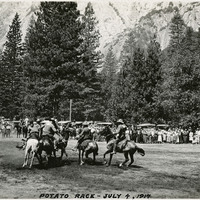
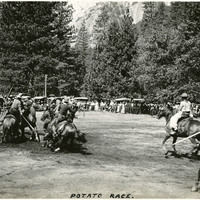
Caption: "Potato Race - July 4, 1917." Several horseback riders holding long poles skirmish in what appears to be a game similar to polo, played with a potato. A crowd has gathered to watch the game, while the rock cliff walls of Yosemite Valley tower in the background. Given the date, this was likely part of Independence Day festivities in the Yosemite Valley.
Date: 7/4/1917
-
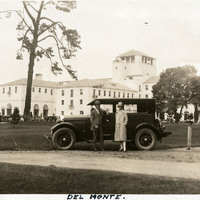
Caption: "Del Monte.," c. 1920. William and Grace McCarthy standing with an automobile in front of the Hotel Del Monte. The second of three hotels built on the site, near Monterey, California, the building in this photograph was destroyed by fire in 1924. The property surrounding the hotel became known as Pebble Beach, now a world-renowned resort and golf course.
Date: 1920
-
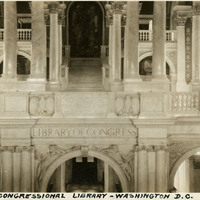
Caption: "Congressional Library -- Washington D.C.," c. 1920. Interior photograph of entrance to the Library of Congress.
Date: 1934
-
Caption: "Potato Race," c. 1917. Several horseback riders holding long poles skirmish around a bucket in what appears to be a game similar to polo, played with a potato. A crowd has gathered to watch the game, while the rock cliff walls of Yosemite Valley tower in the background. Given the date, this was likely part of Independence Day festivities in the Yosemite Valley.
Date: 7/4/1917