
Search All Items
- Filters:
- Language
- English 5312
- Spanish 43
- ENGLISH 2
- English 1
- census_013 1
- Type
- Image 3851
- Still Image 1035
- Text 445
- Text 22
- Textual 2
Search Results 2121 to 2130 of 5424
-
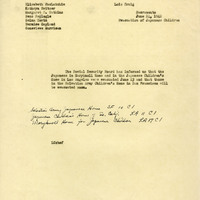
Correspondence from Lois Craig to Elizabeth MacLatchie, et al. regarding the date of evacuation for the Maryknoll Home and the Japanese Children's Home in Los Angeles
Date: June 24, 1942
-
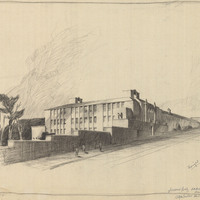
Caption: "Addition to Science Bldg. - S. F. T. C." Downtown Campus, San Francisco State College. Design by Alfred Eichler. Not built like this. Project for Department of Education.
Date: 1931
-
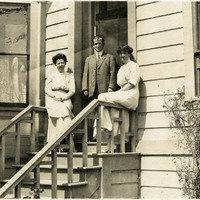
No caption, c. 1905-1906. William and Grace McCarthy, with an unidentified woman, sitting on the entry stairs to an unidentified residence.
Date: 1906
-
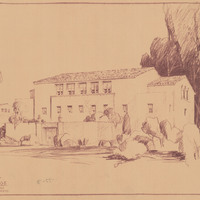
Caption: "Students Union, Fresno State College." Perspective drawing by Alfred Eichler. Built, but according to later design. Project for Department of Education.
Date: 1939
-
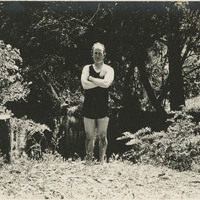
No Caption: shows William McCarthy in a swimsuit near what appears to be a pond in an unidentified location, c. 1915.
Date: 1915
-
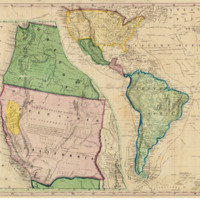
The image is of a lithograph that depicts the various routes to California from Eastern United States via Panama and Cape Horn.
Date: 1849
-
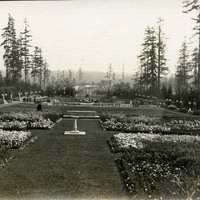
No Caption: View of a garden at the Alaska-Yukon-Pacific Exposition. Held in Seattle to celebrate the development of the Pacific Northwest, the fair attracted 3.7 million visitors over the course of its run from June to October 1909. Although most of the fair's buildings have since been destroyed, several of them now serve as part of the University of Washington campus.
Date: 1909
-
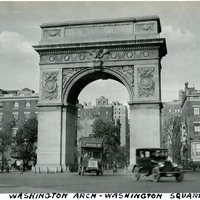
Caption: "Washington Arch - Washington Square. N.Y," c. 1925. The marble Washington Square Arch (Stanford White, architect) was built between 1890 and 1892 to replace the original wooden arch, which had been erected in 1889 to honor the centennial of President George Washington's inauguration.
Date: 1925
-
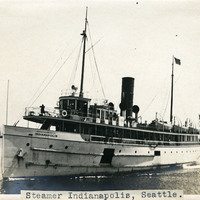
Caption: "Steamer Indianapolis, Seattle.," c. 1906-1908. View of the Indianapolis, a steamship in the fleet of the Alaskan Steamship Company. Built in 1904, the Indianapolis was purchased by the Alaskan Steamship Company (ASC) in 1906. In 1908, it was transferred to the Puget Sound Navigation Company, a subsidiary to the ASC. The Indianapolis was subsequently scrapped in Seattle, in 1938.
Date: 1906
-
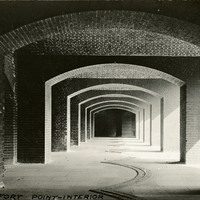
Caption: "Fort Point -- Interior," c. 1910. Postcard showing a view of an interior hall or walkway featuring several arches at Fort Point. The facilities at Fort Point were part of an effort by the U.S. government to protect the Golden Gate, entrance to the San Francisco Bay. Built between 1853-1861, the fort included emplacements for 141 guns but never fired a weapon in defense of the Bay. Its name was officially changed in 1882 to Fort Winfield Scott, but in 1886 the fort was officially downgraded to a sub-post of the San Francisco Presidio and the name discontinued. It was resurrected in 1912, with the establishment of a coastal artillery fortification at the Presidio, called, once again, Fort Winfield Scott.
Date: 1910