
Search All Items
- Filters:
- Language
- English 6853
- Spanish 18
- ENGLISH 3
- English 2
- census_013 1
- contra_costa_schedule_1_volume_1 1
- Type
- Image 3886
- Still Image 2484
- Text 441
- Text 54
- Textual 2
- Image of the California Census from the records of the office of the California Secretary of State 1
Search Results 2201 to 2210 of 6969
-
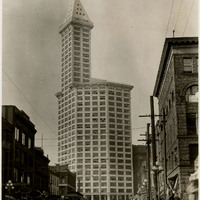
No Caption: The Smith Tower, named after it builder, industrialist and typewriter magnate, Lyman Cornelius Smith, opened in 1914. At 38 floors, the Smith Tower was the first skyscraper in Seattle and the tallest building west of the Mississippi River, c. 1935.
Date: 1935
-
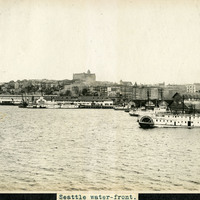
Caption: "Seattle water-front," c. 1905. View of Seattle's waterfront, as seen from Puget Sound. The Washington Hotel overlooks the city from atop Denny Hill in the center distance, built in the 1890s but destroyed in 1906 when the hill was regraded.
Date: 1905
-
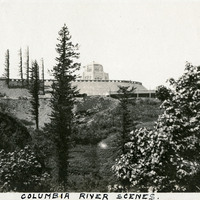
Caption: "Columbia River Scenes.," c. 1920. Shows the Vista House and Crown Point from a point on the hillside below. The Vista House was built in 1918 as a memorial to Oregon's pioneers. Designed by Edgar M. Lazarus, it sits atop Crown Point, a rocky promontory overlooking the Columbia River gorge, along the Historic Columbia River Highway.
Date: 1920
-
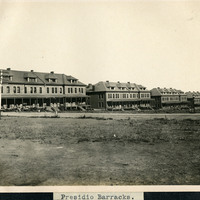
Caption: "Presidio Barracks," c. 1906. Five barrack structures of the Presidio. Established in 1776 by Spanish explorers, the Presidio is a fortified location overlooking the Golden Gate, the entrance into San Francisco Bay. It was closed as a military structure in 1995, and is now a park within the Golden Gate National Recreation Area.
Date: 1906
-
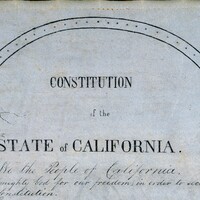
Image of the title page of the orginial Constitution of the State of California.
Date: 1849
-
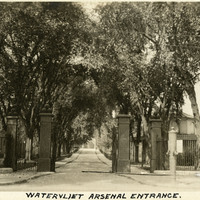
Caption: "Watervliet Arsenal Entrance," c. 1925. A tree-lined driveway to the Watervliet Arsenal Entrance. The Arsenal was founded in 1813 in Watervliet, New York, to support the War of 1812. Today the Arsenal houses the U.S. Army's Benét Laboratories, part of the Army's Armament Research, Development and Engineering Center.
Date: 1925
-
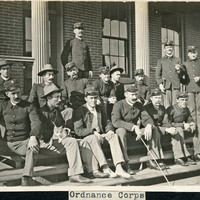
Caption: "Ordnance Corps," c. 1905. A group photograph of the Ordnance Corps at the Benicia Arsenal. The broad mission of the Ordnance Corps was to supply combat weapons and ammunition to U.S. Army forces on the west coast of the United States.
Date: 1905
-
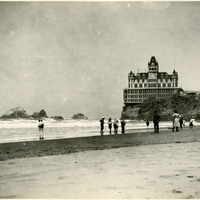
No Caption: The Cliff House, overlooking bathers at Ocean Beach, San Francisco, California, c. 1905. Unidentified people enjoying the surf and beach at Ocean Beach, overlooked by the iconic San Francisco Cliff House. The Victorian structure shown here is the third iteration of the Cliff House, constructed in 1896. It was later destroyed by a fire, in 1907.
Date: 1905
-
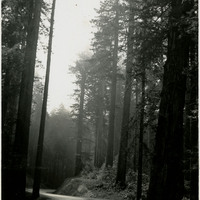
Caption: "Redwood Highway near Crescent City," c. 1935. U.S. Route 101, or the Redwood Highway as it is known in northern California, was established in 1926. It is also known as El Camino Real (The Royal Road) along the southern and central California Coast and approximates the old trail that linked the missions, pueblos, and presidios of the Spanish era.
Date: 1935