
Search All Items
- Filters:
- Language
- English 6020
- Spanish 194
- ENGLISH 2
- English 1
- census_013 1
- Type
- Image 3854
- Still Image 1909
- Text 426
- Text 22
- Textual 2
Search Results 2291 to 2300 of 6281
-
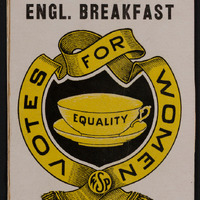
The trademark is one of many from the Trademark Series within the Secretary of State’s Records at the California State Archives. California created the nation’s first trademark law in 1861. According to the law, companies had to apply to trademark their brands through the California Secretary of State’s Office. This trademark for “Equality Brand Tea” depicts a drawing of a ribbon with “Votes for Women” emblazoned on it, surrounding a teacup labeled “Equality.” Packed for the Woman’s Suffrage Party of California, the trademark was a marketing tactic used by the organization to promote and raise money for their cause. George W. Caswell, the tea’s distributor and a well-known coffee and tea merchant in San Francisco, officially filed the trademark on June 22, 1911. However, in keeping with the practice of actively using trademarks in commerce prior to filing, Caswell began distributing the tea in support of the Women’s Suffrage Party beginning in 1910. The proceeds from the sale of Caswell’s tea provided crucial funding during the 1911 campaign for women’s suffrage in California.
Date: June 22, 1911
-
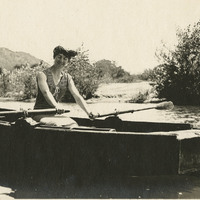
No Caption: Shows Grace McCarthy rowing a small boat on the Russian River at Healdsburg, c. 1915.
Date: 1915
-
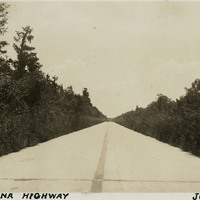
Caption: "Louisiana Highway, June 12, 34." A highway in Louisiana recedes into the distance, flanked by tall vegetation.
Date: 6/12/1934
-
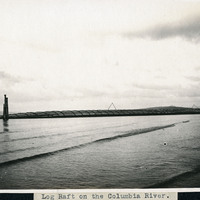
Caption: "Log Raft on the Columbia River.," c. 1909. View of a long raft transporting logs on the Columbia River.
Date: 1909
-
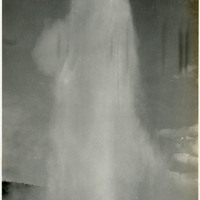
Caption: "Old Faithful Geyser," c. 1920. Eruption of Old Faithful, a cone geyser in Yellowstone National Park.
Date: 1920
-
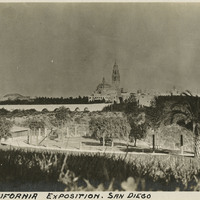
Caption: "Panama-California Exposition, San Diego, July 18, 1915," shows a view of the exposition in the distance.
Date: 1915
-
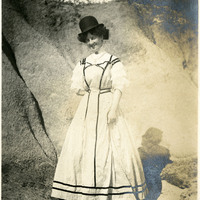
No caption. Grace McCarthy poses for photograph, wearing a man's hat, at an unidentified location, c. 1910.
Date: 1910
-
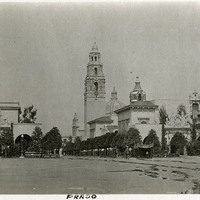
Caption: "Prado," a continuos covered arcade and walkway demarcated by arches at the Panama-California Exposition in San Diego.
Date: 1915
-
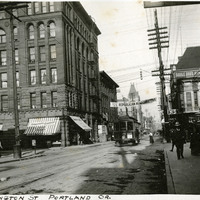
Caption: "Washington Street, Portland, Oregon," c. 1905. A street scene with electric car, several storefronts, and pedestrians milling about.
Date: 1905
-
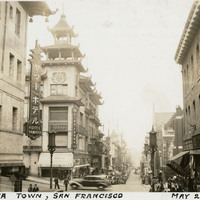
Caption: "China Town, San Francisco, May 21, 1935," shows a busy street scene in the Chinese district of San Francisco.
Date: 1935