Search All Items
- Filters:
- Language
- English 6020
- Spanish 194
- ENGLISH 2
- English 1
- census_013 1
- Type
- Image 3854
- Still Image 1909
- Text 426
- Text 22
- Textual 2
Search Results 3131 to 3140 of 6281
-
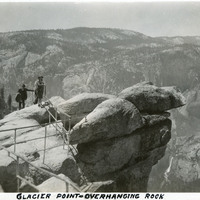
Caption: "Glacier Point - Overhanging Rock," c. 1935. Grace McCarthy poses for a photograph at Glacier Point's iconic overhanging rock. Glacier Point, on the south wall of the valley 3,200 feet above what is now known as Half Dome Village, provides panoramic views of the valley and many of its features. By the time this photograph was taken, safety railings had been installed at the Point to prevent visitors from tumbling over the cliff while trying to get the best views.
Date: 1935
-
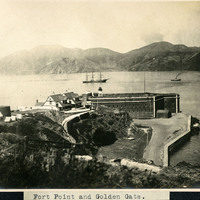
Caption: "Fort Point and Golden Gate," c. 1906. Fort Point in the foreground, with ships in the bay. Fort Point was part of an effort by the U.S. government to protect the Golden Gate, entrance to the San Francisco Bay. Built between 1853-1861 of brick and mortar, the fort included emplacements for 141 guns but never fired a weapon in defense of the Bay.
Date: 1906
-
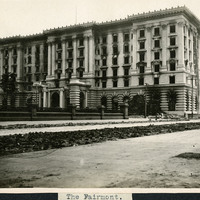
Caption: "The Fairmont," c. 1906. View of the Fairmont Hotel, a luxury hotel in San Francisco. Although construction was mostly finished in 1906, the advent of the San Francisco earthquake and fire of that year damaged the hotel's interior and delayed opening until 1907. It was the first hotel in what is now the Fairmont Hotels and Resorts chain. In 1945, the San Francisco hotel was host to an international conference that culminated in the formation of the United Nations.
Date: 1906
-
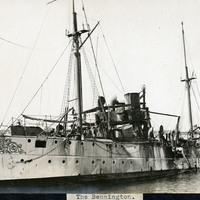
Caption: "The Bennington." View of the USS Bennington, a U.S. Navy gunboat, Yorktown class, launched in 1890. She had tours of duty in South America, the Mediterranean, North and Central America, Hawaii, and the Philippines. On July 21, 1905, while in San Diego Harbor, the Bennington's boiler exploded, killing sixty-six men and injuring many more. This photograph appears to have been taken after the explosion.
Date: 1905
-
No Caption: Court of the Universe at the Panama-Pacific International Exposition, 1915. The Panama Pacific International Exposition was held to celebrate the completion of the Panama Canal, as well as inventive technologies and new industries from around the world. It was also a chance for San Francisco to show the world how the great city had rebuilt and thrived after the devastation of the 1906 earthquake and fire.
Date: 1915
-
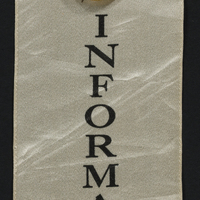
In the years following the passage of the 1911 state suffrage amendment, supporters continued to advocate for the federal enfranchisement of women across the country. Suffragists created and distributed ephemera to publicize their cause and gain support for the movement, including literature, pennants, posters, shopping bags, playing cards, postcards, and pin-back buttons, such as this ribbon with a “Votes for Women” pin from 1912.
Date: 1912?
-
Caption: "Prado or Promenade -- Havana -- Cub. July 4, 1934." Street scene, with a wide street lined with marble benches and trees on both sides. The Paseo del Prado is the oldest paved street in Havana, marking the line between Centro Habana and Old Havana. Its route was established in 1772 by Don Felipe Fonsdeviela y Ondeano. The street was redesigned in 1925 by landscape architect Jean-Claude Nicolas Forestier (who added the trees and marble benches).
Date: 7/4/1934
-
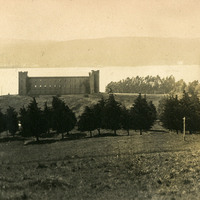
No Caption. A view of the Benicia Arsenal, with the store house in the distance. William McCarthy began his career as an inspector of armaments for the U.S. War Department at the Benicia Arsenal in 1903. The arsenal was established in 1851 as the first Ordnance Supply Depot in the West, from which it supplied and supported U.S. troops, from the Civil War through WWII and the Korean War. It was deactivated in 1963. Benicia Arsenal store house in the distance, c. 1905.
Date: 1905
-
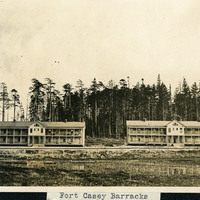
Caption: "Fort Casey Barracks," c. 1908-1912. View of two barracks buildings at Fort Casey, located on Whidbey Island in Puget Sound. Construction began on the fort in 1897. Fort Casey was part of the "triangle of fire," three coastal defense fortifications (Fort Casey, Fort Worden, and Fort Flagler) guarding the entrance to Puget Sound. The U.S. Army used the facility until the 1950s, when the fort was decommissioned. The area is now a state park.
Date: 1908
-
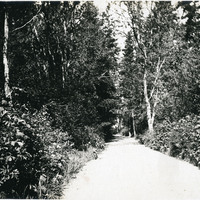
No Caption: See also 96-07-08-alb08-024 with caption: Ordnance Avenue, Fort Casey," Washington, c. 1908. Fort Casey was part of the "triangle of fire," three coastal defense fortifications (Fort Casey, Fort Worden, and Fort Flagler) guarding the entrance to Puget Sound. Construction began on the fort in 1897, and the U.S. Army used the facility until the 1950s, when the fort was decommissioned. The area is now a state park.
Date: 1908