
Search All Items
- Filters:
- Language
- English 6457
- Spanish 23
- ENGLISH 2
- English 2
- census_013 1
- contra_costa_schedule_1_volume_1 1
- Type
- Image 3882
- Still Image 2094
- Text 445
- Text 54
- Textual 2
- Image of the California Census from the records of the office of the California Secretary of State 1
Search Results 4371 to 4380 of 6559
-
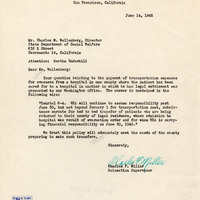
Correspondence from Charles F. Miller to Charles M. Wollenberg regarding transportation expenses for evacuees needing hospital care
Date: June 14, 1945
-
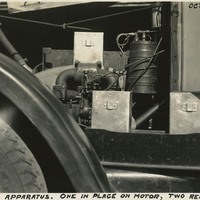
Caption: "Cooking Apparatus. One in Place on Motor, Two Removed. Oct. 10, 1934." This photograph shows three metal boxes used by the McCarthys for cooking during their five-month cross-country auto trip. One of the boxes is set on the engine of their automobile to heat the contents.
Date: 10/10/1934
-
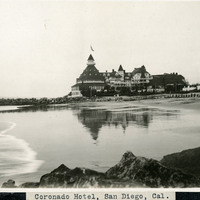
Caption: "Coronado Hotel, San Diego, Cal.," c. 1910-1913. View of the Coronado Hotel, with beach in the foreground. At the time it opened in 1888, this hotel was the largest beach resort in the world. The Ballroom Tower, the highest point of the building, is 120 feet tall. See also 96-07-08-alb05-201.
Date: 1910
-
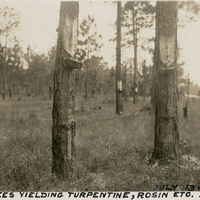
Caption: "Pine Trees Yielding Turpentine, Rosin [sic], Etc. Florida, July 13, 1934." A group of pine trees with bark removed in a "V"-shaped, or "catface" pattern to encourage production of resin, from which turpentine is made. Small buckets hang at the end of each "V" to catch the resin. This turpentine farm may actually be in Georgia, rather than Florida.
Date: 7/13/1934
-
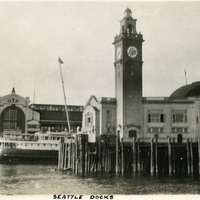
Caption: "Seattle Docks," c. 1914. Dock facilities at Seattle, showing a clock tower, as well as the G.T.P., or Grand Trunk Pacific, dock, a shipping pier at the end of Madison Street (the G.T.P. watchtower is visible at the far left of the photograph). This dock, built in 1910, was destroyed by a fire on July 30, 1914. It was rebuilt, but without the watchtower, and served the city until 1964 when it was demolished.
Date: 1914
-
Cyrus Noble, Crown Cocktails, Manhattan Club, Lilydale Elkhorn, etc
Date: 1899