Search All Items
- Filters:
- Language
- English 3825
- Spanish 4
- ENGLISH 1
- contra_costa_schedule_1_volume_1 1
- Type
- Image 2628
- Still Image 826
- Text 361
- Text 12
- Textual 2
- Image of the California Census from the records of the office of the California Secretary of State 1
Search Results 421 to 430 of 3868
-
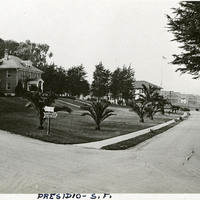
Caption: "Presidio -- S.F.," c. 1915-1920. Crossroads in the Presidio, with manicured grounds and buildings on all sides.
Date: 1920
-
Caption: "Starrett Tool Works, Athol, Massachusetts. Sept. 6, 1934." The Starrett Tool Works was founded in 1880, when Laroy Sunderland Starrett started a tool shop in Athol. He later expanded the facility, until by 1906 the company employed more than 1,000 workers in the manufacture of precision tools. By the time Starrett died in 1922, the company had achieved global recognition, establishing offices in more than a dozen countries. Starrett is still in operation today.
Date: 9/6/1934
-
Caption: "Scene on the Truckee Highway -- Sierra Nevada." Mountain scene with streambed, likely along what is now Interstate 80.
Date: 1927
-
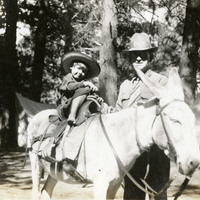
No caption, c. 1935. William McCarthy standing with small child riding a donkey in campground at Yosemite National Park.
Date: 1935
-
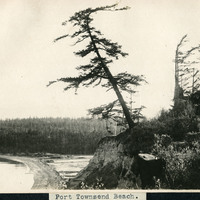
Caption: "Port Townsend Beach.," c. 1908-1912. Tree on edge of cliff, with beach in the distance.
Date: 1908
-
Caption: "Presidio Nursery," c. 1906, shows the gardens at the Presidio, with blooming flowers planted to spell "PRESIDIO."
Date: 1906
-
Caption: "Placerville," c. 1920. Street scene in Placerville. Automobiles mix with horses and wagons along the curbs.
Date: 1920
-
President Lyndon B. Johnson with Dr. Martin Luther King, Jr. at the signing of the Voting Rights Act
This item has no description.
Date: 1965
-
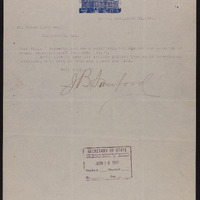
J. B. Sanford was a California State Senator representing the 4th Senate District and served as Chairman of the Democratic Caucus during the 1911 legislative session. He was one of the most prominent legislative opponents of women's suffrage in California. Sanford authored the official ballot argument against Senate Constitutional Amendment No. 8 (Proposition 4). In it, Sanford argues that women should not be granted the right to vote because suffrage is a privilege rather than an inherent right. He asserts that political involvement would distract women from their primary domestic duties, disrupt traditional gender roles, and ultimately harm the family structure. Furthermore, he claims that men already adequately protected women's interests in government and that granting women the vote would lead to increased social instability.
Date: June 24, 1911