
Search All Items
- Filters:
- Type
- Image 3882
- Still Image 2127
- Text 433
- Text 50
- Image of the California Census from the records of the office of the California Secretary of State 1
- Language
- English 6465
- Spanish 33
- ENGLISH 2
- English 2
- census_013 1
- contra_costa_schedule_1_volume_1 1
Search Results 5461 to 5470 of 6569
-
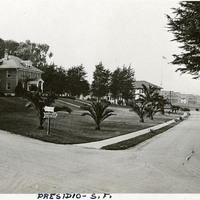
Caption: "Presidio -- S.F.," c. 1915-1920. Crossroads in the Presidio, with manicured grounds and buildings on all sides.
Date: 1920
-
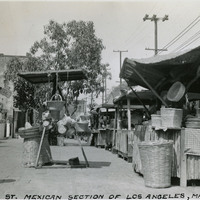
Caption: "Olvera St. Mexican Section of Los Angeles, May 18, 1934." View of the Olvera Street Market in Los Angeles. In 1926, Christine Sterling began efforts to preserve the buildings on and around Olvera Street (one of the oldest parts of Los Angeles). After several years of struggle and fundraising, Olvera Street was closed to automobile traffic in 1929, and opened as the Paseo de Los Angeles in 1930. The street and its market quickly became popular tourist sites, promoters touting the area as "A Mexican Street of Yesterday in a City of Today."
Date: 5/18/1934
-
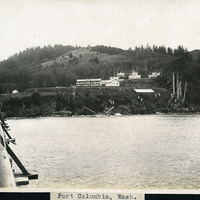
Caption: "Fort Columbia, Wash.," c. 1910. Fort Columbia, built between 1896 and 1904, sits on Chinook Point overlooking the Columbia River. It is part of the Three Fort Harbor Defense System protecting the mouth of the river from enemy incursion or attack (the other forts being Oregon's Fort Stevens and Washington's Fort Canby). Fort Columbia was decommissioned after World War II, and is now the site of a Washington State Park.
Date: 1910
-
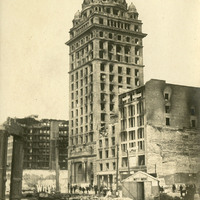
Caption: "Ruins of Call Building." Completed in 1898 and designed by civic leader Claus Spreckels, the Call building on the corner of 3rd and Market streets was one of the first skyscrapers in San Francisco, built to house the San Francisco Call newspaper offices. While the structure withstood the 1906 earthquake, the interior caught fire and sustained considerable damage. After major renovations, the building is today known as The Central Tower.
Date: 1906