
Search All Items
- Filters:
- Type
- Image 3877
- Still Image 1470
- Text 425
- Text 50
- Image of the California Census from the records of the office of the California Secretary of State 1
- Language
- English 5791
- Spanish 37
- ENGLISH 2
- English 2
- census_013 1
- contra_costa_schedule_1_volume_1 1
Search Results 5521 to 5530 of 5886
-
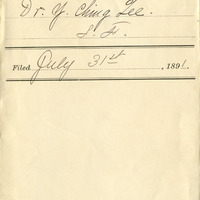
Chinese Drugs, Teas, and Herbs Kept at the Old Place by Dr. Y. Chuing Lee
Date: 1891
-
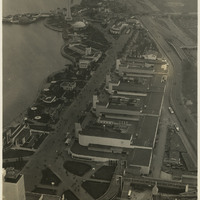
Caption: "Chicago Fair Grounds. View from Sky Ride Tower, Sept. 15, 34." Bird's eye view of the fair grounds where Chicago held its Century of Progress Exposition, a world fair celebrating the city's one-hundred year anniversary of incorporation. Originally planned to only run from May to November in 1933, it was such a success that its organizers decided to keep it running for a second season from May through October the following year. This photograph was taken from one of the two Sky Ride Towers, 628-foot structures that carried an aerial tram or gondola over the harbor in the center of the fair grounds. Over 4.5 million passengers enjoyed the views from the Sky Ride before it was demolished after the conclusion of the exposition in 1934.
Date: 9/15/1934
-
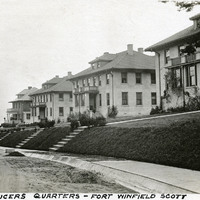
Caption: "Officers Quarters -- Fort Winfield Scott," c. 1912. Shows a row of multi-story homes along a landscaped street. Fort Winfield Scott was a coastal artillery post at the San Francisco Presidio. Originally named Fort Point, it was part of an effort by the U.S. government to protect the Golden Gate, entrance to the San Francisco Bay. Built between 1853-1861, the fort included emplacements for 141 guns but never fired a weapon in defense of the Bay. Its name was officially changed in 1882 to Fort Winfield Scott. This only lasted four years, until 1886 when the fort was officially downgraded to a sub-post of the San Francisco Presidio and the name discontinued. It was resurrected in 1912, with the establishment of a coastal artillery fortification at the Presidio, called, once again, Fort Winfield Scott.
Date: 1912
-
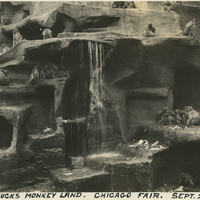
Caption: "Frank Bucks [sic] Monkey Land. Chicago Fair. Sept. 20, 1934." View of a rocky cliff populated by a species of monkey. This was part of a display at Frank Buck's Jungle Camp, an exhibition at Chicago's Century of Progress Exposition. The Exposition, a world fair attended by thirty-nine million people, celebrated Chicago's one-hundred year anniversary of incorporation. Originally planned to only run from May to November in 1933, it was such a success that its organizers decided to keep it running for a second season from May through October the following year. The central theme of the Exposition was technological innovation, with a motto of "Science Finds, Industry Applies, Man Conforms."
Date: 9/20/1934
-
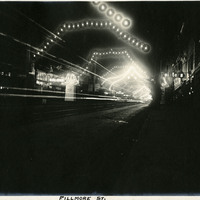
Caption: "Fillmore St," c. 1908. A view of San Francisco's Fillmore Street at night, which has been decorated with garlands of electric lights along the length of the street.
Date: 1908
-
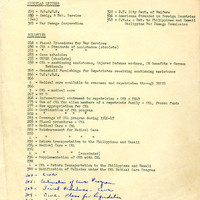
List of bulletins and circular letters relating to procedures published and distributed to counties
Date: Undated
-
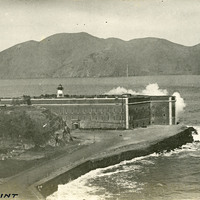
Caption: "Fort Point," c. 1910. This postcard shows a view of Fort Point, at the entrance to San Francisco Bay. The facilities at Fort Point were part of an effort by the U.S. government to protect the Golden Gate, entrance to the San Francisco Bay. Built between 1853-1861, the fort included emplacements for 141 guns but never fired a weapon in defense of the Bay. Its name was officially changed in 1882 to Fort Winfield Scott, but in 1886 the fort was officially downgraded to a sub-post of the San Francisco Presidio and the name discontinued. It was resurrected in 1912, with the establishment of a coastal artillery fortification at the Presidio, called, once again, Fort Winfield Scott.
Date: 1910
-
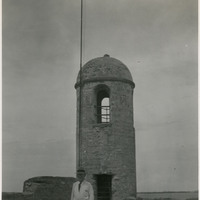
Caption: "Fort Marion, St. Augustine, Fla. July 10, 1934." William McCarthy standing in front of a corner tower on the ramparts of Castillo de San Marcos (Castle of Saint Mark). The core structures of this coastal defense fort were completed by Spanish forces in 1695. Numerous additions, renovations, and repairs have occurred since that time. When Spain ceded Florida to the U.S. in 1821, the Castillo was designated a U.S. Army base and renamed Fort Marion, in honor of Frances Marion (also known as the Swamp Fox, Marion was an American Revolutionary War hero known for his guerilla war tactics). The fort was deactivated in 1933, and turned over to the National Park Service.
Date: 7/10/1934