
Search All Items
- Filters:
- Language
- English 6219
- Spanish 19
- ENGLISH 2
- English 1
- contra_costa_schedule_1_volume_1 1
- Type
- Image 3871
- Still Image 1869
- Text 440
- Text 54
- Textual 2
- Image of the California Census from the records of the office of the California Secretary of State 1
Search Results 5921 to 5930 of 6312
-
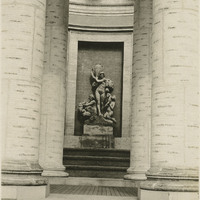
Caption: "The Four Seasons," shows the Fountain of Autumn (Furio Piccirilli, sculptor), in the Court of Four Seasons, at the Panama-Pacific International Exposition. See also 96-07-08-alb01-100 and 96-07-08-alb03-025.
Date: 1915
-
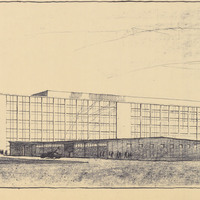
Caption: "DMV Office Bldg. #2, Sacto." Drawing and preliminary design of Headquarters Office Building #2, Department of Motor Vehicles, by Alfred Eichler. Preliminary design by Alfred Eichler, 1960. Project for Department of Motor Vehicles.
Date: 1960
-
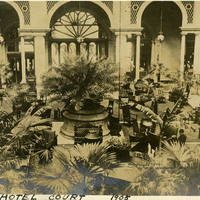
Caption: "Palace Hotel Court 1905," c. 1906. (Handwritten on photograph: "copyright 1906 by W._ Wod_n."). The Palace Hotel was originally built in 1875, rebuilt in 1909, and was one of the first premier luxury hotels in San Francisco.
Date: 1906
-
Caption: "Kindergarten. Transverse Section looking North." Scheme No. 7., color drawing of California School for the Deaf at Berkeley. Design and drawing by Alfred Eichler, 1944; built in 1946. Project for Department of Education.
Date: 1944
-
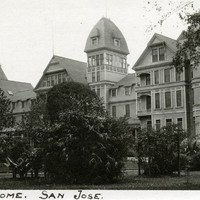
Caption: "Hotel Vendome. San Jose.," c. 1910. View of the Hotel Vendome, a resort hotel built in San Jose in 1889. The hotel was demolished in 1930, the land subdivided and sold as residential lots.
Date: 1910
-
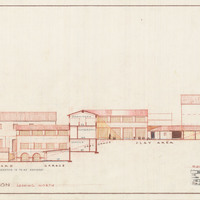
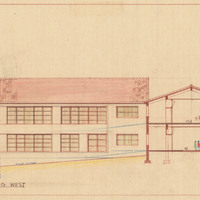
Caption: "Section Looking West." Color drawing of postwar building, California School for the Deaf at Berkeley. Design and drawing by Alfred Eichler, 1944; built in 1946. Project for Department of Education.
Date: 1944
-
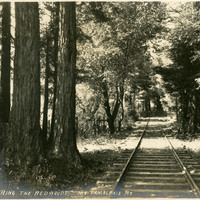
Caption: "Entering The Redwoods, Mt Tamalpais RR," c. 1907. A view of the Muir Woods Railway tracks, established in 1896 as a scenic tourist railway between Mill Valley and the east peak of Mount Tamalpais in Marin County.
Date: 1907
-
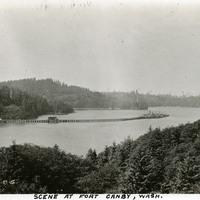
Caption: "Scene at Fort Canby, Wash.," c. 1909. Overview of jetty and wharf facilities jutting out from the shoreline near Fort Canby in the state of Washington. See also 96-07-08-alb05-231.
Date: 1909
-
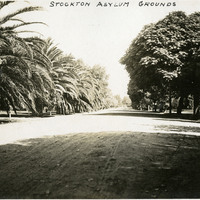
Caption: "Stockton Asylum Grounds," Stockton, California, c. 1906. The Stockton Insane Asylum was established in 1851, completed in 1853, and was the first public mental health hospital in California. It remained a functioning state hospital until 1995.
Date: 1906
-
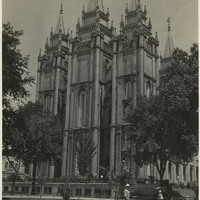
Caption: "Mormon Temple, Salt Lake City, Utah," c. 1935. The Salt Lake City Mormon Temple was opened in 1893 and is the largest temple (253,015 square feet) built by the Church of the Latter-day Saints.
Date: 1935