
Search All Items
- Filters:
- Language
- English 6219
- Spanish 19
- ENGLISH 2
- English 1
- contra_costa_schedule_1_volume_1 1
- Type
- Image 3871
- Still Image 1869
- Text 440
- Text 54
- Textual 2
- Image of the California Census from the records of the office of the California Secretary of State 1
Search Results 6001 to 6010 of 6312
-
The Census of 1852 collection includes enumerations of California's 32 counties, arranged into 126 volumes. Schedule I enumerated the county's inhabitants, while schedule II enurmerated economic production. Many pages of this volume are damaged.
Date: California Secretary of State
-
Correspondence from J. Edgar Hoover to E. J. Clark regarding information on loyalty of individuals applying for restoration of liquor licenses; see Correspondence on Licenses (F3718_322_003a-F3718_322_003b)
Date: October 16, 1951
-
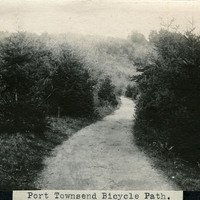
Caption: "Port Townsend Bicycle Path.," c. 1910. Image of a rural path or road, surrounded by trees and vegetation, with a hill in the distance. The bicycle made its first appearance in the Puget Sound area in the late 1870s. Within twenty years, thousands of enthusiasts had adapted the new mode of transportation. Such enthusiasts often formed clubs, such as the Queen City Good Roads Club, based in Seattle (south of Port Townsend). These clubs advocated, constructed, and helped to maintain pathways dedicated specifically to bicycle traffic. Ironically, the efforts made by the bicyclists to generally improve roadways contributed to the rise of another new mode of transportation -- the automobile.
Date: 1910
-
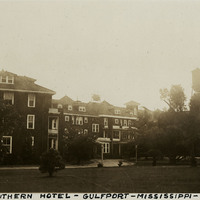
Caption: "Great Southern Hotel -- Gulfport -- Mississippi -- June 19, 34." The Great Southern Hotel, built in 1902-1903 by entrepreneur Joseph T. Jones (also the founder of Gulfport), offered luxurious amenities such as telephones in each room, baths, hot and cold running water, billiards, gardens, and a tennis court. The hotel was hit hard by the Great Depression in the 1930s, even closing briefly. After a short-lived revival in the 1940s, the hotel was demolished in 1951 to make way for U.S. Highway 90.
Date: 6/19/1934
-
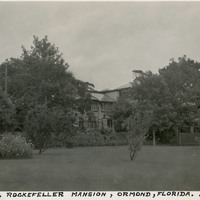
Caption: "John D. Rockefeller Mansion, Ormond [sic], Florida. July 10, 1934." A large mansion can be glimpsed through surrounding trees and other vegetation in this photograph. The mansion is known as the Casements, for the numerous casement windows incorporated into its structure. Built in 1914 in Ormond Beach, John D. Rockefeller purchased the home in 1918 for use as a winter residence. After Rockefeller died in 1937, the property was sold several times, until the City of Ormond Beach bought it in 1973. The city renovated it for use as a cultural and community center, a purpose which it still serves.
Date: 7/10/1934
-
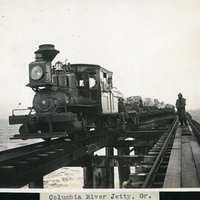
Caption: "Columbia River Jetty, Or.," c. 1910. View of a jetty built at the mouth of the Columbia River, carrying a railroad trestle. A train and its operators, hauling cars loaded with large rocks, dominates the photograph. This is likely the so-called South Jetty, extending more than six miles into the ocean from Point Adams on the Oregon side of the river mouth. The jetty system at the mouth of the Columbia River was constructed between 1885 and 1917. Designed to funnel water from the Columbia River in a more concentrated fashion into the Pacific Ocean, the jetty system helped create a deeper, more stable shipping channel.
Date: 1910
-
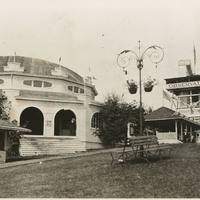
No Caption: See also 96-07-08-alb05-185, with caption: "Council Crest -- Portland," Buildings and benches in a park setting, with a tall observation tower, labeled the "Observatory," at the right side of the photograph. Council Crest Park in Portland, Oregon was the site of an amusement park between 1907 and 1929. The buildings in this photograph were part of that park. The Observatory, built in 1907, was demolished in 1941 to make room for a water tower. The area is still in use as a municipal park.
Date: 1909