
Search All Items
- Filters:
- Language
- English 6457
- Spanish 23
- ENGLISH 2
- English 2
- census_013 1
- contra_costa_schedule_1_volume_1 1
- Type
- Image 3882
- Still Image 2094
- Text 445
- Text 54
- Textual 2
- Image of the California Census from the records of the office of the California Secretary of State 1
Search Results 6391 to 6400 of 6559
-
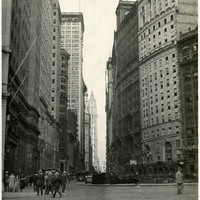
*Caption: "Broadway at Bowling Green, N.Y." Street scene in New York City, showing Broadway near the small public park Bowling Green. See also 96-07-08-alb11-233 and 96-07-08-alb09-204.
Date: 8/31/1934
-
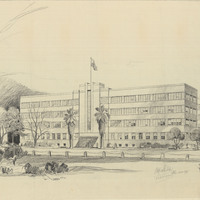
Drawing of Department of Motor Vehicles Building, Sacramento (Woodland). Designed by H. S. Hazen. Sketch by Alfred Eichler, c. 1935. Project for Department of Finance - Buildings and Grounds - Office Buildings.
Date: 1935
-
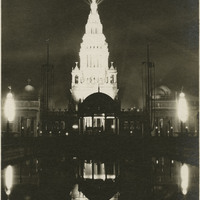
Caption: "Court of the Universe at Night," shows the Tower of Jewels in the background and reflected in the reflecting pool, at the Panama-Pacific International Exposition. See also 96-07-08-alb01-109.
Date: 1915
-
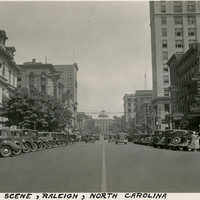
Caption: "Street Scene, Raleigh, North Carolina, July 19, 1934." Busy street in Raleigh, lined with parked cars. The dome and columned entryway of North Carolina's Capitol can be seen in the distance.
Date: 7/19/1934
-
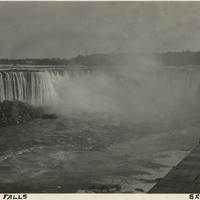
Caption: "Niagara Falls, Sept. 10, 1934." View of Horseshoe Falls, largest of the three waterfalls that make up the iconic Niagara Falls straddling the border between Ontario, Canada, and the State of New York.
Date: 9/10/1934
-
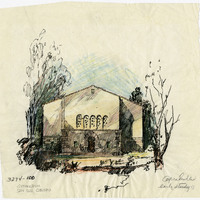
Caption: "Gymnasium, San Luis Obispo." Early study of gymnasium, California State Polytechnic College, San Luis Obispo; design and color drawing by Alfred Eichler. Built. Project for Department of Education.
Date: 1936
-
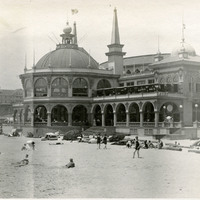
No Caption: c. 1910. View of beach and casino building in Santa Cruz. The casino, designed by William Weeks, was constructed in 1907, replacing a previous casino building that burned down in 1906.
Date: 1910
-
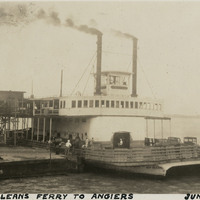
Caption: "New Orleans Ferry to Angiers [sic] June 15, 34." Ferry New Orleans getting ready for a trip to Algiers, on the west bank of the Mississippi River (now one of the oldest neighborhoods in New Orleans). Ferries were critical to the movement of people and freight between the east and west banks of the Mississippi River for more than a century. There are still several that serve the New Orleans area.
Date: 6/15/1934
-
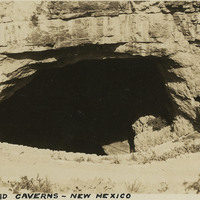
Caption: "Carlsbad Caverns -- New Mexico, May 30, 34." View looking into dark cave mouth of Carlsbad Cavern, a series of natural underground chambers including the "Big Room," the fifth-largest such chamber in North America with a length of 1,000 feet, a width of 625 feet, and a maximum height of 255 feet. The site was named Carlsbad Cave National Monument in 1923, and declared Carlsbad Caverns National Park in 1930.
Date: 5/30/1934