
Search All Items
Search Results 641 to 650 of 774
-
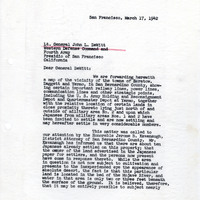
Correspondence from Earl Warren (by Warren Olney) to John L. DeWitt regarding strategic military points in the vicinity of San Bernardino County
Date: March 17, 1942
-
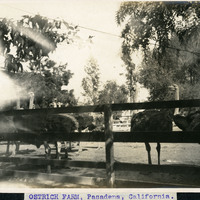
Caption: "OSTRICH FARM, Pasadena, California.," c. 1905. View of several ostriches in a corral at the Caswston Ostrich Farm in Pasadena. Opened by Edward Cawston in 1886, this was the first ostrich farm in the U.S. It became a popular tourist stop along the Pasadena and Los Angeles Electric Railway in the early twentieth century, where visitors could ride an ostrich, or be pulled by one in a light card. They could also buy merchandise made out of ostrich feathers, such as hats and boas. The farm closed in the mid-1930s.
Date: 1905
-
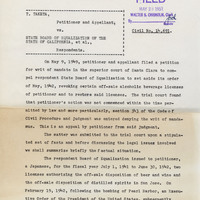
Opinion for 1st District Court of Appeals case T. Taketa vs. State Board of Equalization of the State of California, et al. regarding revocation of licenses
Date: Filed May 28, 1951
-
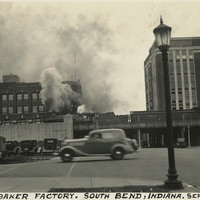
Caption: "Studebaker Factory. South Bend, Indiana. Sept. 13, 1934." Two buildings of the Studebaker Factory in South Bend are visible in this photograph. The Studebaker brothers started operations in South Bend in 1852, when they established a blacksmith shop and foundry. They soon began building wagons and carriages, demand for which soared with the advent of the Civil War and an increase in migration toward and into the American West. The company gradually phased out wagon production in favor of automobile manufacture in the early twentieth century. Sales declined after World War II, leading to the eventual closure of the factory in 1963.
Date: 9/13/1934