Search All Items
- Filters:
- Language
- English 3825
- Spanish 4
- ENGLISH 1
- contra_costa_schedule_1_volume_1 1
- Type
- Image 2628
- Still Image 826
- Text 361
- Text 12
- Textual 2
- Image of the California Census from the records of the office of the California Secretary of State 1
Search Results 811 to 820 of 3868
-
Statement on the responsibilities of social agencies to integrate the Japanese population
Date: Undated
-
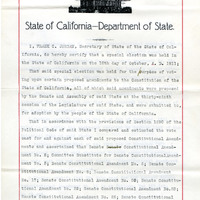
This official certification, issued by California Secretary of State Frank C. Jordan, records the results of the October 10, 1911 special election and formally certifies the constitutional amendments approved by California voters. Among the measures adopted was Senate Constitutional Amendment No. 8 (Proposition 4), which amended the California Constitution to grant women the right to vote, as well as several other Progressive Era reforms approved during the same election, including measures expanding direct democracy and government reform. Senate Constitutional Amendment No. 8 passed by a margin of just 3,587 votes, with a final count of 125,037 to 121,450. Its passage made California the sixth state in the nation to enfranchise women, nearly nine years before the ratification of the 19th Amendment to the U.S. Constitution. Following the amendment’s adoption, Governor Johnson called a special legislative session in November 1911 to revise state election laws and fully implement women’s newly won voting rights.
Date: October 10, 1911
-
Caption: "Prado or Promenade -- Havana -- Cub. July 4, 1934." Street scene, with a wide street lined with marble benches and trees on both sides. The Paseo del Prado is the oldest paved street in Havana, marking the line between Centro Habana and Old Havana. Its route was established in 1772 by Don Felipe Fonsdeviela y Ondeano. The street was redesigned in 1925 by landscape architect Jean-Claude Nicolas Forestier (who added the trees and marble benches).
Date: 7/4/1934
-
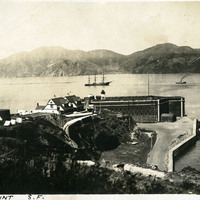
Caption: "Fort Point S.F." c. 1906. See also 96-07-08-alb06-009 with caption: "Fort Point and Golden Gate." A view of Fort Point in the foreground, with ships in the bay. Fort Point was part of an effort by the U.S. government to protect the Golden Gate, entrance to the San Francisco Bay. Built between 1853-1861 of brick and mortar, the fort included emplacements for 141 guns but never fired a weapon in defense of the Bay.
Date: 1906
-
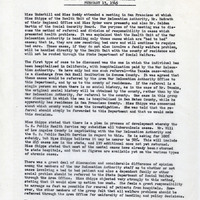
Summary of meeting "to discuss methods of referral and division of responsibility in cases that presented health problems"
Date: February 13, 1945