Bookmarks

Showing Bookmarks 1 to 6 of 6

  • McCarthy Album 05, Photograph 321

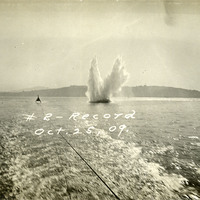
    Caption: "#2 -- Record Oct 25, 09." This postcard shows plume of seawater thrown up by a mortar shell during target practice at Fort Point. The facilities at Fort Point were part of an effort by the U.S. government to protect the Golden Gate, entrance to the San Francisco Bay. Built between 1853-1861, the fort included emplacements for 141 guns but never fired a weapon in defense of the Bay. Its name was officially changed in 1882 to Fort Winfield Scott. This only lasted four years, however, for in 1886 the fort was officially downgraded to a sub-post of the San Francisco Presidio and the name discontinued. It was resurrected in 1912, however, with the establishment of a coastal artillery fortification at the Presidio, called, once again, Fort Winfield Scott.

    Date: 1909-10-25

  • Radio and Camera Regulations

    Notice on policies regarding prohibited articles; Sections: Radio Transmitters, Short Wave Radio Receiving Sets, Cameras, Deposit of Prohibited Articles, Penalties

    Date: Undated

  • McCarthy Album 08, Photograph 196

    Caption: "Green Hotel, Pasadena, Cal.," c. 1905. View of Castle Green, built as an annex to the Hotel Green in 1899. The original Hotel Green opened for business as a lavish resort in 1894. Its success prompted owner George Gill Green to expand the hotel and build the additional facility shown here, connected to the original hotel by an elaborate enclosed pedestrian bridge (seen at the far right of this photograph). This second building, designed by architect Frederick I. Roehrig with Spanish, Moorish, and Victorian elements, became known as "Castle Green." Business declined in the 1910s, and the complex was sold to a series of investors. In the mid-1920s, Castle Green was subdivided into fifty residential apartments. It remains a residential complex today.

    Date: 1905

  • McCarthy Album 11, Photograph 204

    Caption: "Subtreasury, Wall Street, New York. Washingion [sic] Statue Marking the Spot Where Washington took his Oath of Office, April 30, 1789, Aug. 6, 1934." The original building on this site, constructed in 1700, served as New York's City Hall, then as the Capitol for the newly-created United States under the Constitution of 1789, and was the site of George Washington's inauguration as the first U.S. President. The original building was demolished in 1812, but a new building, designed to house the U.S. Custom House for the Port of New York, was opened in 1842. It is this building that is seen in the photograph. The new building subsequently housed one of six U.S. sub-treasuries between 1862 and 1920. A statue of George Washington (John Quincy Adams Ward, sculptor) was erected in front of the building in 1882, to commemorate the approximate site of Washington's inauguration.

    Date: 8/6/1934

  • McCarthy Album 11, Photograph 289

    Caption: "State Capitol Building. Des Moines, Iowa. Sept. 26, 1934." Construction began on Iowa's State Capitol Building, designed by John C. Cochrane and Alfred H. Piquenard, in 1871, but was not completed until 1886. Mifflin E. Bell, an assistant to Piquenard, redesigned the central dome after Piquenard's death in 1876. Damage to the building's exterior over the years prompted a massive renovation project, begun in 1983 and completed in 2001.

    Date: 9/26/1934

  • McCarthy Album 11, Photograph 301

    Caption: "Brigham Youngs [sic] Bee Hive House. Brigham Young had 19 Wives and 52 Children. Oct. 3, 1934." Street scene in Salt Lake City, Utah. Brigham Young, founder of the Church of Jesus Christ of Latter Day Saints built the so-called "Beehive House" in 1854 to house himself and several of his wives (Young practiced polygamy). The Beehive House is visible in the photograph at the far right, with a widow's walk featured on its roofline. Designed by Salt Lake Temple architect Truman O. Angell, the Beehive House has since been used as a residence for several dignitaries of the Mormon Church, as well as a boarding home for young Mormon women. The house was restored in the late 1950s and is now a museum. See also 96-07-08-alb11-301.

    Date: 10/3/1934