Bookmarks
Showing Bookmarks 1 to 21 of 21
-
-
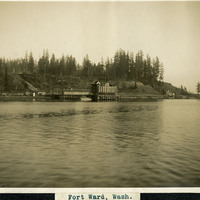
Caption: "Fort Ward, Wash.," c. 1908-1912. View from Puget Sound of a wharf and other buildings of Fort Ward. Originally known as Bean Point, Fort Ward was established by the U.S. Army Coastal Artillery Corps in 1890. Re-named Fort Ward in 1903, the facility included four coastal batteries designed to assist in protecting Puget Sound and the nearby Naval Shipyard from enemy attack. Fort Ward was placed on inactive status in the 1920s, but was revived by the U.S. Navy during World War II. The Navy discovered the fort's location was ideal for listening to radio communications from Japan, and it subsequently became a top secret listening post with a link directly to Washington, D.C. The Navy continued the fort's use as a listening post until 1956, when it was again taken over by the U.S. Army. The Army subsequently stopped all activity in 1958, ultimately selling portions of the fort to the Washington State Park System in 1960. It is now a state park.
Date: 1908
-

-
-
-
-

No Caption: See also 96-07-08-alb07-284 with caption: "The Fatal Wedding." Shows an unidentified bride and groom at an outdoor wedding, at unidentified location, c. 1915.
Date: 1915
-
-

Press Release by H. C. Pratt announcing the issuance of Public Proclamation No. 24, which terminates all exclusion orders
Date: September 4, 1946
-

Caption: "Scenery on Grinnell Glacier Trail - Glacier Park," c. 1935.
Date: 1935
-
-
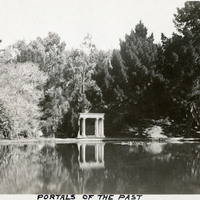
Caption: "Portals of the Past," c. 1915-1920. A monument in Golden Gate Park in San Francisco, on the shores of Lloyd Lake, consisting of a white marble archway and columns. The archway was originally part of the Nob Hill mansion belonging to railroad tycoon Alban Towne. The mansion was destroyed in the 1906 San Francisco earthquake and fire, but the entryway still stood. It was moved to the shore of Lloyd Lake in 1909, as a memorial to the pre-1906 city.
Date: 1920
-
-
-
-
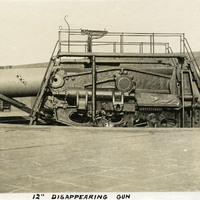
Caption: "12" Disappearing Gun," c. 1915. Side view of a coastal defense gun. Retracting or disappearing guns were a form of artillery developed in the nineteenth century in which heavy artillery guns were placed on rotating carriages that allowed retraction of the weapon after firing, to enable reloading while under enemy fire.
Date: 1915
-
-
-
-
-